Emergency Room Simulator Diagnosis Workflow
Turn symptoms into confirmed diagnoses without drowning in unnecessary tests.
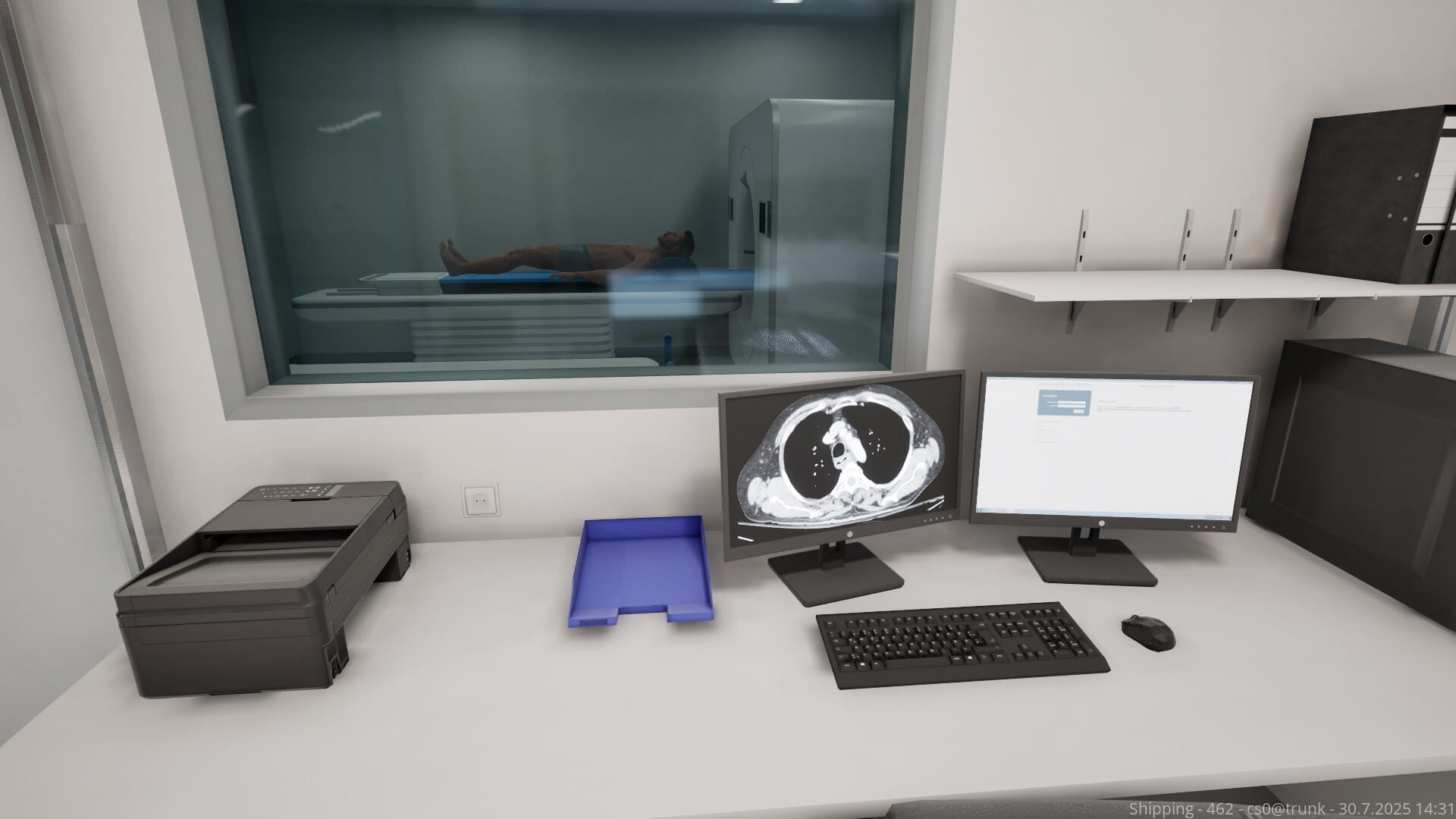
Diagnosis is the spine of Emergency Room Simulator. Aerosoft’s Steam description promises visual exams, patient questioning, and confirmatory testing — CT, X-ray, ultrasound, ECG, blood work — so you can prove your suspicions before treating. This workflow guide teaches a repeatable clinical reasoning loop that works on your first shift and still holds when the waiting room is full.
The game explicitly says you’re the doctor and your choices matter. That means the sim judges your prioritization, not just your final click on the correct medication.
Step 1: Build a problem list
Start every encounter by translating the chief complaint into one-line problems:
- “Crushing chest pain, diaphoresis, nausea”
- “Lower leg deformity after fall, distal pulses present”
- “Fever, stiff neck, photophobia”
If the paramedic briefing adds data, merge it immediately. A problem list keeps you from chasing incidental findings on a chest X-ray when the real issue is hypoxia.
Cross-link: First-shift guide for where briefing fits in the macro loop.
Step 2: Generate a differential (dangerous first)
List at least three explanations, ordered by must-not-miss severity:
- Life threats (MI, PE, tension pneumo, sepsis)
- Common diagnoses (musculoskeletal strain, viral syndrome)
- Zebras you only pursue if clues appear (Boerhaave, adrenal crisis)
Emergency Room Simulator rewards players who ask, “What kills this patient if I send them home?” not players who anchor on the first symptom cluster.
Step 3: History questions that actually change orders
Official copy highlights targeted questions. Use organ-system buckets:
| System | High-yield questions |
|---|---|
| Cardiac | Radiation, exertional component, leg swelling, cocaine use |
| Pulmonary | Pleuritic pain, hemoptysis, recent surgery, OCP use |
| Neuro | Onset time, weakness, speech changes, anticoagulants |
| Abdominal | Location migration, blood in stool, pregnancy status |
Stop when answers eliminate a differential branch — do not role-play a 45-minute clinic visit unless the scenario demands it.
Step 4: Focused physical exam
Visual and hands-on exams should confirm or refute hypotheses, not replace tests. Exam maneuvers likely map to contextual prompts — inspect, palpate, auscultate, neuro checks — depending on UI design at launch.
Document key positives and negatives in the chart (see patient chart guide). Missing documentation may affect scoring if the sim tracks continuity.
Step 5: Select confirmatory tests
Match tests to questions:
- ECG — chest pain, syncope, tachycardia, electrolyte suspicion
- X-ray / CT — trauma, suspected pneumothorax, abdominal catastrophe
- Ultrasound — FAST-style trauma, OB complaints if supported
- Labs — infection, anemia, metabolic causes of altered mental status
The medical equipment guide explains each modality’s gameplay role. Avoid ordering everything — time and triage pressure should punish shotgun diagnostics.
Step 6: Reconcile results and commit
When results arrive, explicitly state: Diagnosis X, ruled out Y because Z. Then choose treatment aligned with real procedures (medication, wound care, splinting). If results contradict your leading hypothesis, revisit history before repeating the same test.
Step 7: Reassess after intervention
Diagnosis does not end at the first treatment click. Re-examine vitals, repeat focused questions, and order follow-up labs if the patient fails to improve. Many sim scenarios hide complications that appear only after initial stabilization.
Workflow under triage load
When multiple patients wait, use parallel thinking:
- Stable patients can wait for slower workups.
- Unstable patients get minimal parallel testing (ECG + glucose + IV access) before full imaging.
Read triage priorities for queue management and emergency procedures when a diagnosis must happen during active resuscitation.
Common diagnostic traps
- Premature closure — assuming gastritis in young chest pain without ECG
- Availability bias — repeating CT because the scanner UI is convenient
- Ignoring context — trauma mechanism matters more than isolated pain scale
- Chart lag — failing to record contraindications before medication prompts
Practice drills before launch
Pick three chief complaints (chest pain, abdominal pain, shortness of breath). For each, write a five-item differential and one must-order test without looking up answers. After release, time yourself on the same scenarios and compare test efficiency scores if the game exposes them.
Related pages
Frequently Asked Questions
Quick answers to the most common questions.
Can I misdiagnose patients?
Official materials emphasize consequences and independent judgment. Expect incorrect pathways to affect outcomes after launch.
Do I need medical school knowledge?
The sim teaches through scenarios, but basic ER reasoning helps. This guide frames real clinical structure in game terms.
Which test should I order first?
Order the test that rules out the most dangerous condition fastest — often ECG or glucose depending on presentation.
Where is equipment explained?
See the [medical equipment guide](/guides/medical-equipment/) for modality-specific tips.